Explore higher consciousness, its signs and stages, and practical ways to raise your awareness through grounded spiritual growth and daily choices.

Introduction
Most people never question why modern music is tuned the way it is—but once you do, it’s hard to unsee. The debate around 440 Hz vs 432 Hz touches history, power, consciousness, and the way sound interacts with the human body.
Why Music Is Tuned to 440 Hz
Explore how 440 Hz became the global tuning standard, who decided it, and why some believe this shift was less about harmony and more about control, uniformity, and industrial efficiency.
432 Hz vs 440 Hz: How Each Affects the Body
Learn the emotional and physical differences between 432 Hz and 440 Hz, including why many listeners describe 432 Hz as calming, heart-opening, and more aligned with the natural world.
What This Frequency Debate Really Means
Discover why the 432 Hz conversation persists today, how frequency may influence consciousness, and what it reveals about sound, health, and the systems shaping human experience.
Most go their whole lives hearing all the music around them—movie soundtracks, radio hits, the soft hum of a piano in a quiet room—without ever realizing they're all tuned to the same invisible anchor: 440Hz. A single number, a single audio frequency. A single global agreement that quietly shapes how the modern world experiences sound.
It's the quiet backbone of today's sound, a musical note chosen as the 'right' one—a choice so normalized by history that few of us ever go on to question why it became the current reference frequency for nearly all the instruments around us.
This article explores that frequency with curiosity rather than dogma. We'll take a closer look at what 440 Hz is—musically, historically, scientifically, energetically, and otherwise—and why this seemingly simple choice of musical pitch matters if you care about consciousness, about sovereignty over your own vibration, or about tuning yourself back into harmony with the universe.
Our goal isn't so much to push one frequency as better or worse, but to understand how sound shapes our inner lives, physical vital parameters, the subtle territories of consciousness. More than sound, the conversation around frequency is, to us, a conversation about awakening.
That's precisely what we at GFL stand for: remembering that we're allowed to experiment, question inherited defaults, and retune not only our music but our lives.
If you're someone who feels the world more deeply—who senses energy in music listening, who recognizes sound carries profound meaning—you'll feel right at home here.
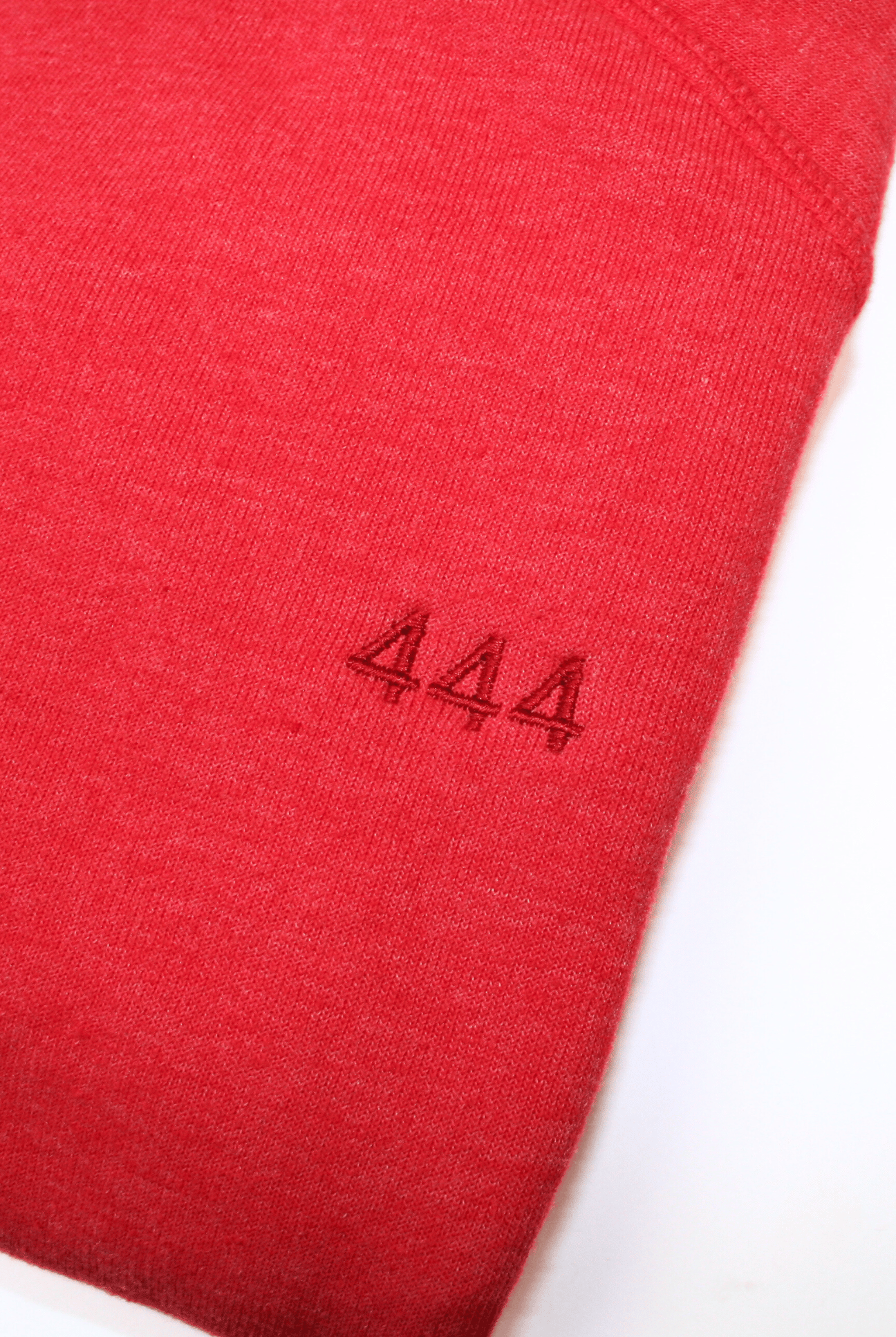
Before we dive in, to check out the My Inner Child Can Hear You T-Shirt—a reminder that your sensitivity's a gift and your perception's an asset, no matter how very hard that may be to see at the moment.
The 440 Hz Frequency: The Standard Tuning That Shapes Modern Sound

What 440 Hz Means in Music
To really get 440 Hz, you might picture a single vibrating musical note—A4, the pitch above middle C—oscillating precisely 440 times per second. This pitch is used as an anchor, letting musical instruments tune relative to one another so musical harmony feels coherent. In other words, music tuned to 440 Hz is simply music aligned around a single standard tone.
For this reason 440 Hz (known also as Stuttgart pitch) is considered the current reference frequency. It's how we make sure the same music played in different places still feels like the same song. This "A"'s become the universal checkpoint; the sound a tuning fork hits, the frequency orchestras match before playing, the pulse that guides everything from classical music to bubblegum pop.
Why Music Tuned to 440Hz Became the Pitch Standard
The interesting part isn't quite that 440 Hz exists, but rather that it became the rule. Before the 20th century, different countries, cities, and orchestras might tune to wildly different frequencies. One Italian city might tune its orchestras higher, while a German ensemble might not. Scientists had also experimented variously with scientific pitch, based on a middle C set to 256 Hz rather than A. There wasn't really one correct frequency, just a spectrum of specific frequencies chosen for local taste or instrument construction.
But the world needed consistency. Trade was globalizing, recordings were spreading; orchestras needed a unified reference frequency. In 1936, accordingly, the American Standards Association recommended 440 Hz as the official pitch standard.

Soon after, in 1937, electrical engineer and musician James Swinburne represented the UK's Royal Musical Association at a conference discussing the British concert pitch standard. While British piano tuning had customarily been to A439 at the time—a prime number—Swinburne explained that 440, a much smoother number to factor and electronically synthesize. Thus the case for musical harmony was proposed. Various European country delegates soon agreed, and the standard pitch was formalized by the International Organization for Standardization in 1975.
From there, 440 Hz became the modern tuning standard, echoed in everything from tuning musical instruments to literal rooms dedicated to frequency calibration. It was very much a social agreement, and once agreement crystallizes, it tends to erase other quiet, forgotten options.
What Science Says About 440Hz: Health Effects and the Human Body
Even within the scientific community, sound is recognized as a quiet influencer of the human system. The human ear is sensitive to certain frequencies because of how our bodies evolved. Data suggests our hearing centers, breath rhythms, brainwaves, and even heart rate have potential to respond to sound in measurable ways.
Scientific studies looking at music listening sessions with different tones have measured shifts in several more clinical parameters, including decreases in mean respiratory rate values and blood pressure values. Some studies have also observed a slight decrease in heart rate.
The body doesn't hear sound; it absorbs it, entrains to it. Synchronizes with it. And that may be why so many spiritually attuned people instinctively feel that frequency matters long before the larger sample pool of formal research catches up.
432 Hz vs. 440 Hz: Which is better for your health?
The debate between 440 Hz and 432 Hz tuning is often discussed in both musical and spiritual circles, with 432 Hz being an alternative tuning for the musical note A4, known as Scientific Pitch. Pythagoras is credited with originating the 432 Hz tuning using his monochord, an ancient scientific and musical instrument. Many believe that since 1936, (when 440 Hz was formalized as the standard tuning for A4), music has been out of alignment with natural patterns and the human body. Even some musicians claim that 432 Hz sounds good and much more sonorous.
There are those that believe this to be an intentional act to infiltrate the subconscious and create anxiety and unrest within the listener, while listening to music tuned to 432 Hz is believed by some to promote relaxation and a sense of peace.
There is, however, a lot of pushback from the scientific community who consider such claims 'pseudoscientific'. But here are some scientifically irrefutable facts from an experiment on the effects of 432 Hz versus 440 Hz conducted in Italy:
- Participants in this study reported feeling more focused and satisfied after listening to music tuned to 432 Hz compared to 440 Hz.
- Listening to 432Hz music led to a marked decrease in heart rate compared to 440Hz.
- Listening to 432Hz music led to a slight reduction in blood pressure compared to 440Hz.
- Subjects reported feeling more generally satisfied when listening to 432 Hz tuned music.
In another study testing both men and women listening to 440 Hz & 432 Hz tuning during high intensity workouts, results of the study suggest that music tuned to 440Hz can improve concentration and positive mood during high-intensity training for men, but was not statistically significant for women. The study results suggest repeating this experiment with both a larger sample size, and ultimately, deciding which resonates with you.
It is worth it to note that much of the scientific evidence that has been accumulated might not accurately reflect what we ourselves might know to be true. We leave it to your discretion.
Beyond Science: Why Some Believe 440Hz Shapes Consciousness & Energetic Reality
Outside the lab, there's a whole other conversation we're having—one that treats frequency not just as a physical vibration but an energetic language. Many might notice that music tuned to one pitch feels emotionally quite different from music tuned to another. It may be subtle, the kind you feel more than you can identify differences with words, but it's real enough that people often become deeply curious about tuning itself.
Some mystics prefer to explore alternatives to the standard tuning, aligning their instruments to tones associated with solfeggio frequencies (you can read more about the grounding benefits of the 174Hz frequency and 528Hz frequency here and here). Others look to the Earth's natural rhythms like the Schumann resonance, finding that creativity flows more intuitively when they vibrate in harmony with planetary frequencies.
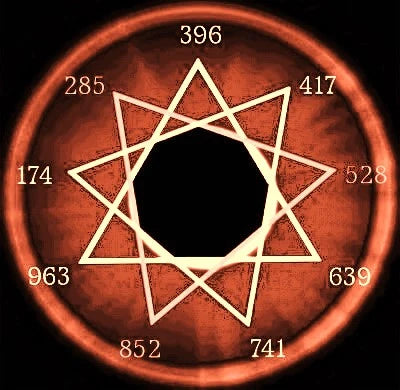
It's incredibly personal. The point isn't that the world's current reference frequency is 'wrong', but rather that we all too often forget we have options, forget we can dare to adventure. When everyone defaults to the same standard tuning, we risk losing a sense of personal exploration. The global pitch we use today is influenced by musical organizations who chose consistency for practical reasons, not necessarily spiritually or personally resonant ones. Over time, that practical choice can become a limitation.
For seekers, creatives, sensitives, it makes sense to tap into what different tones unlock internally. Sometimes the shift comes not from the frequency alone, but from reclaiming the freedom to explore what resonates with your own consciousness.

Experimenting with Frequency for Sound Healing
If you've ever felt calmer after hearing a tuning fork ring out, or energized after a bowl vibrating at a particular musical pitch, then you already know intuitively that experimenting with specific frequencies can be a healing practice.
Many sound healers like to start with the 432Hz as an anchor, then slowly drift into other tones to notice how the body responds and what health effects make themselves apparent. You might listen to track tuned slightly higher or lower, comparing how your chest, breath, or energy field reacts. The process is much less about finding the perfect frequency and much more about learning how sound interacts with your emotional landscape.
Some might even try their own at-home experiments to find what's personally resonant. Consider two sessions, two frequencies: one with a track in the modern standard pitch, and another with alternative tunings, perhaps 432Hz or a solfeggio frequency. Pay close attention to what you feel: a slight decrease in heart rate, a shift in your breath, a sense of general satisfaction afterward. More than the charts, though, trust your intuition. If a tone brings you into alignment, that's valid, whether or not it appears in a research paper.
Others explore tonal systems inspired by nature, number mysticism, geometry. Some feel drawn to prime number frequencies, some to old-world tuning systems preserved by niche musicians who never stopped questioning the default.
There's no single right way to explore sound healing; there is only curiosity—and the willingness to let your body speak. When approached with true authentic presence, any simple listening session becomes a doorway into your inner world.
Finding Harmony: Re-Tuning Your Life From the Inside Out
At the end of the day, the conversation around 440Hz is really a conversation about awareness; about remembering that the world we inherit isn't always the world we'd consciously choose. The standard tuning isn't necessarily good or bad, but it's an example of how easily we accept defaults. And every default, whether musical, emotional, or spiritual, carries an energetic signature we may, or may not, resonate personally with.
When you start exploring frequency in a deeper way, you'll likely start realizing just how profoundly sound shapes your inner reality. You'll notice which tones soften your body, which ones make your chest feel open, which ones help you come home to yourself. This whole journey becomes less about music theory and more about personal sovereignty, about reclaiming the right to tune your life according to what truly uplifts you.
For us at GFL, this is the true heart of our mission. We create coded clothing and messages not to instruct, but to stir insight and awakening. In a world where people are encouraged, incentivized even, to flatten their emotions, conform their energy, and tune themselves to match what everyone else is doing, we want to remind you that you're allowed, and designed, to vibrate differently. You're allowed to forge your own resonance, your own rhythm, your own field of meaning.
If you want something physical to anchor that vibration into your daily life, we invite you to explore our My Inner Child Can Hear You T-Shirt: a reminder that, rather than weaknesses, your sensitivity, your intuition, and your deep feeling are your tuning forks, your power.
Published
Updated
Frequently Asked Questions
-
Most modern musicians in the western world use 440Hz because historically organizations like the International Organisation for Standardization needed to set a consistent global pitch. Their goal was practicality, and over time, this became the expected tuning standard, even though many other traditions used different reference points.
-
Different frequencies can create different emotional textures and physical sensations. Some listeners may feel grounded with deeper tones, elevated with brighter ones, or soothed by steady vibrational patterns. Spiritual and sound-healing communities often explore frequencies beyond the mainstream, including solfeggio frequencies like the 174Hz frequency and 528Hz frequency.
-
Some sound healers feel that 432 Hz offers a softer, more heart-centered resonance, often describing it as warmer or more spacious than 440Hz. It isn't necessarily better, but it's energetically distinct. Some say it aligns more closely with natural cycles or cosmic harmonics; others simply feel calmer when listening to it. Sound healing is at its core about noticing what brings you, personally, into harmony.
More Guidance in Spiritual Healing | GFL

Breathwork Meditation: Techniques, Benefits & Spiritual Practices
Breathwork meditation is the practice of turning our ordinary automatic breathing into an intentional tool for physical grounding, spiritual connection, and mental clarity.
Torus Field: Sacred Geometry, Energy Flow, and Universal Patterns
Explore the torus field, its meaning in sacred geometry, energy flow, scientific examples, human-body claims, and its role in spiritual meditation.