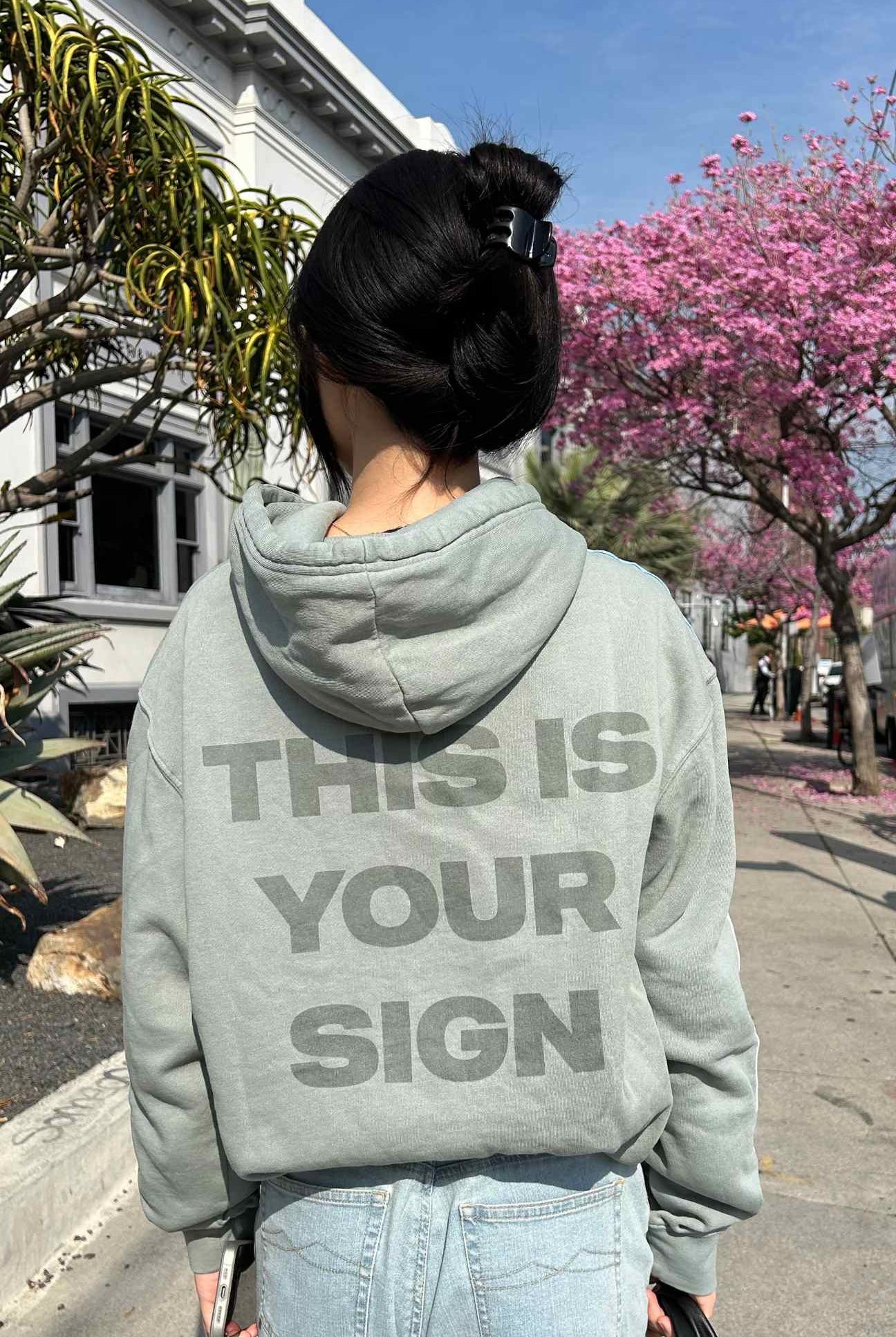
You don’t have to do it perfectly to do it consciously.

GFL: How did becoming a mother deepen or change your spiritual journey? And what does being a spiritual mother mean to you?
Adrienne: Becoming a mother felt like the most intense ego death I’ve ever experienced. I’ve done deep healing work and explored powerful forms of self-discovery, but nothing compares to motherhood. It really is a rebirth—it’s a birth, but also the death of a past version of yourself.
It brings up so much of your own wounds—your trauma, your patterns—and in that way, children really are the most amazing teachers. For me, a lot came up because of my past. I experienced neglect and instability growing up, and there were deep wounds around attachment and safety that I was carrying. When I first became pregnant, I was honestly really scared. I wasn’t excited—I was overwhelmed with fear. I didn’t have a healthy model of motherhood, so I kept asking myself, am I going to repeat those patterns? Am I capable of doing this differently?
But when my child arrived, it wasn’t what I feared. There was so much unconditional love—but also so much that surfaced within me that needed to be healed. Motherhood really brought me face-to-face with my shadow. It made me aware of what I was carrying, what I might be projecting, and what was actually mine to work through.
That’s why I say children are the best teachers. They act as a mirror. They show you, in real time, what needs your attention and healing. For me, it became about breaking generational patterns—healing the wounds that were passed down, especially through the women in my family.
Spirituality played a huge role in helping me navigate that. It gave me guidance and helped me understand that my past wasn’t just something that happened to me—it was part of my path, something that allows me to hold space for others and help them move through their own darkness.
Motherhood is not always soft or easy. It’s deep, it’s confronting, and at times it’s overwhelming. But it’s also incredibly beautiful. There’s so much joy in witnessing these bright, new beings experience life for the first time. I really see myself as a guide for my own children—someone who is here to support them on their journey, not control it or make it look a certain way.
So in many ways, becoming a mother pushed me deeper into my spiritual path. It brought up my shadow work in a way nothing else could, and through that, it’s been both deeply healing and incredibly transformative.
Motherhood also gave me a greater sense of purpose to actually work on myself. When things feel dark, or when stuff comes up, it’s like—I have to be there for them. Especially with my mental health, having PTSD from my past, there were times where it was hard to find that inner sense of purpose just for myself.
But it’s kind of like having a pet or an animal—no matter how you feel, they still need you. Even on days where I feel low, or disconnected, or not loving myself, I have these little beings who just want to be with me. And there’s something so powerful in that—like, wow, you want to be around me? It pulls you out of your own head. It brings you back.
In that way, motherhood feels like a deep act of service. And service is something I feel really strongly connected to in my spiritual path. Being a mom feels like one of the highest forms of service—to humanity, to the planet. I’m doing the best I can to support them so they can grow into beings who are connected, who are helping the world, who are tapped into their own spiritual gifts.
I really see them as these bright, guided souls, already connected to something greater. And I’m just here, in my human form, to support them, to nurture that, and to cheer them on as they become who they’re meant to be.

Melissa: For me, becoming a mother brought my spirituality out of theory and into real life. It’s less about what I know and more about how I show up—patience, presence, regulation, love. But it also shifted me out of being so focused on my own inner world, which at times could feel a little obsessive or heavy. It reminded me that it’s not just about me anymore.
In that shift, a lot softened. Things I once carried—old wounds, stories, emotions—started to feel less overwhelming. Some of the inner child work I’ve done began to click in a different way, and I’ve been able to let go of more than I expected. There’s been a deeper understanding that as parents, we really are doing the best we can with what we have. That realization alone has brought a lot of compassion and release into my healing.
It’s made my journey feel less about “fixing” myself and more about living, growing, and showing up with awareness—for both of us.
GFL: How did you feel when you were about to bring your first child into the world? How did you prepare for that? Were you in a spiritual place in your life?
Adrienne: When I was about to bring my first child into the world, I wasn’t as grounded in my spirituality as I am now. Looking back, I can see that I was always divinely supported and guided—but at the time, I didn’t fully trust or recognize that. I was mostly just really stressed and overwhelmed.
I was constantly in my head, “future-tripping”—wondering if I’d be a good mom, if I’d be able to connect, if I’d repeat patterns from my past. There was a lot of fear. And now, having gone through it twice, I always tell other moms: try to trust, try to surrender, and don’t grip so tightly to control or planning. Because at the end of the day, so much of it is out of our hands.
With my first, my nervous system was so dysregulated from stress and past trauma, and I do believe that energy can affect both mom and baby. The delivery was tough—she didn’t want to come out, I needed medical intervention, and afterward she had challenges feeding. It was just a harder start overall. I don’t put all of that on myself, but I do believe energy plays a role, and I wish I had known then what I know now about being more relaxed, supported, and regulated.
I also had pretty severe postpartum depression with my first. I just didn’t have the tools back then. I didn’t have community, I wasn’t surrounded by other mothers, and my mindset was shaped by working in the ER for years—I had seen the worst-case scenarios, so that was the lens I was viewing everything through. It created this underlying sense of fear, almost like a feeling of doom.
With my second child, I approached things very differently. I was more aware, more intentional about supporting my body and my nervous system. I focused more on trust, on grounding, and on taking care of myself. I even did things like placenta encapsulation to help with hormones and mood, which made a big difference for me.
Now, I really see how important energetic and emotional preparation is. There are so many beautiful ways to support that—like prenatal yoga, sound baths, and being in community with other mothers. Those things help you regulate, feel supported, and shift out of that fear-based state.
If I could go back, I would have spent less time stressing and more time relaxing, laughing, and trusting the process. But at the same time, that experience was part of my path. It’s what allows me now to support other mothers who are feeling that same fear, that same uncertainty. Because it can feel really intense—it can feel like doom—but you’re not alone in that, and there are ways to move through it with more ease and support.
GFL: Do you believe your children have a soul mission? If so, how do you support it and nurture it- as a spiritual mother knowing your soul mission and what you've been through in life?

Melissa: I believe every child comes in with their own essence and path. My role isn’t to shape him into who I think he should be, but to support who he already is. I try to create space for his personality, his emotions, and his curiosity to unfold naturally.
And I think, as parents, we all feel like our kids are meant for something special in their own way. But my son really is incredibly aware—so observant, empathetic, and intuitive. I mean… he even guessed lottery numbers once, haha.
Whatever he chooses to do with those natural qualities, I know it’ll be something meaningful. My role is to nurture that, expose him to as much as I can, and support his growth—but also to keep learning how to let go and trust him to discover who he is on his own.
Adrienne: Yes, I do believe my children have their own soul missions.
With my older one, Rupi, it feels very clear to me. She’s extremely energy intuitive. She’s neurodivergent, and I honestly see that as a gift—her brain just processes things differently, especially on a sensory and energetic level. She’s very in tune, and there have been moments where she’s said or sensed things before they’ve happened. She’s just very connected.
I try not to project too much onto her, though. I don’t want to force a path just because of what I believe or what I’m around. But she’s naturally immersed in it—she’s been around sound bowls, frequency music, meditation, Reiki, energy workers—so it’s just normal to her. And she’s very drawn to certain people, like my friend Lisa, who’s a Reiki master and very connected to guides and ancestral work. I just let that happen organically.
For Rupi, it’s more about supporting her in feeling comfortable with who she is—especially with how she processes energy and the world. Letting her know there’s nothing “wrong,” that it’s actually a gift. Because I think a lot of people come in with these sensitivities and intuitive abilities, but over time, they get shut down or dimmed because they don’t fit into what’s considered “normal.” I really want to protect that in her. If she chooses to explore it more deeply, I think she could be an incredible healer or energy intuitive.
She’s also amazing with animals—especially horses. The way they respond to her energy is really beautiful. There’s just something very natural and aligned there.
With Percy, it feels different. She’s such a creator. Ever since she was little, she’s loved building things, designing, creating—especially with fashion. She sees something in her mind and just wants to bring it to life. She’s also incredibly kind and empathetic, but what really stands out is that creative spark.
She’s also very magnetic—like a little sunflower. People are naturally drawn to her energy, and she brings a lot of joy wherever she goes. I don’t know exactly what her path will look like, but I know it will involve creating and making people feel something.
So for both of them, I don’t try to control or define their paths too much. I just try to nurture what’s already there—give them supportive, positive experiences, encouragement and let them grow into who they’re meant to be.
GFL: Do you feel like your own biological children choose you as a parent on a soul level? Do you believe you have a soul contract?

Melissa: I do. I feel like we chose each other. There’s something about our connection that feels deeply intentional—like we found each other at the exact moment we were meant to.
I had wanted to be a mother for so long. It was something I called in during every moon ceremony—through wishes, affirmations, repeating “I am a mother” long before it was my reality. And in a way, I could feel that my child was there… almost waiting for me to be ready.
There was a moment that really shifted everything. I had just facilitated a sound bath that felt like it completely opened my heart. It was a full moon in October, and I remember looking up and saying, “God, I’m ready. I don’t care about the details—I’m ready to be a mom. I’m ready for my child.”
A couple months later, right before New Year’s, I found out I was pregnant.
I also feel like he chose both me and his father—that he knew exactly what he needed and that we each bring something important to his life. Like he came in already aligned with the balance of what would shape him and support him in becoming who he’s meant to be.
Now he’s almost four, and he’s truly such a special soul. So intuitive, deeply compassionate, and incredibly grounding for me. Especially in moments when I feel challenged, he has a way of bringing me back to what really matters.
He really feels like my little earth angel.
Adrienne: Yes, I do believe that they chose me on a soul level.
It’s hard to fully explain, but I really feel like we were paired for a reason. Just like I believe I chose my own path—being born into the situation I was in, with my mother, and everything that came with that when I was younger. It wasn’t easy or glamorous, but I believe I chose it so I could learn, grow, and eventually help others move through similar experiences. I really feel that any kind of pain can be transmuted into something beautiful, and that was part of my journey.
So in that same way, I feel like Percy and Rupi chose me—to guide them, to teach them, and to grow together.
Sometimes I still question it, like, why did you pick me? What am I here to show you? What are we here to do together? And I just come back to doing my best—supporting them, loving them, and being present for whatever their path is.
There’s also something really interesting in our dynamic. Percy is very similar to me, and Rupi is very similar to her dad, but energetically there’s this kind of crossover—it feels intentional, like we were all placed together in this timeline exactly as we’re meant to be.
And the more I grow and do this work, the more clear it becomes. It’s like over time, you start to see it—you start to feel that, oh, this was meant to be this way.
GFL: What does breaking generational patterns look like for you?
Melissa: It looks like choosing awareness over reaction. Creating emotional safety. Allowing feelings instead of shutting them down. Speaking with respect, even in hard moments.
But it also includes having compassion for where I came from. Understanding that my parents were doing the best they could, too. Breaking patterns doesn’t mean rejecting everything—it means keeping what felt like love and choosing to do differently where it’s needed.
For me, it’s doing my own healing so I don’t pass down what I didn’t choose, while also releasing the weight of blaming the past. It’s a balance of accountability and grace.
GFL: How do you feel like your spirituality shows up most in your day-to-day life as a mother?
Melissa: In the small moments—slowing down, being present, repairing after hard moments, choosing patience when it’s easier to react. It’s in how I speak, how I listen, and how I create a sense of safety and love in our space.
But honestly, being a mother in itself feels like one of the most spiritual things I’ve ever experienced. It’s changed what spirituality even means to me. It’s less about seeking and more about being—being in the imperfect, messy, real moments and still seeing the beauty and the depth of love in all of it.
It’s also shifted what my practices look like. I don’t always have the same time for long, deep meditation, but I try to give myself at least a moment when I wake up and before bed to reconnect. And now that he’s a little older, I’m starting to share those practices with him—simple meditation, a little yoga, even just slowing down together.
One thing that’s become really important for us is a daily gratitude practice. He may not fully understand it yet, but I know these small, consistent moments are building something deeper—for both of us.
Adrienne: I feel like my spirituality shows up most in just how I am day to day—motherhood is really about modeling. Being of service, coming from a place of love, being in integrity with my word… it doesn’t have to be anything big or profound.
For me, spirituality is about embodying what I practice. It’s as simple as treating people how I would want to be treated, being present, being kind. Those really basic principles are what I try to live by every day.
Of course, my kids do see the more tangible parts of it—I do sound baths, I’ve even done them at their school, I teach meditation, and they’re around energy work and healing practices. So that’s normalized for them. But more than anything, it’s how I show up. I’m generally calm, grounded, and less reactive because I’m doing that inner work daily. So when things come up, I’m able to respond in a more regulated, steady way—and they feel that.
I think that consistency is what impacts them the most. Just being a stable, loving presence, especially during stressful moments.
I don’t try to force anything onto them, either. I didn’t grow up with these practices—I didn’t even know about meditation until later in life—so it feels really special that they’re even exposed to it. But I don’t push a specific belief system. My husband comes from a Sikh background, which is very rooted in service and the idea that we are all one, and I think those values naturally come through.
At the end of the day, I believe it’s less about teaching spirituality in a structured way and more about living it. Kids are like sponges—they pick up on everything. So it really comes down to how I show up, how I treat people, and how I move through the world. And if they become curious and want to explore it more, I’m always there to guide them.
It also shows up in the way they hold me accountable. Kids really mirror everything, so even in small, everyday moments—like brushing their teeth or keeping routines—I have to show up as an example, even when I don’t feel like it. It’s like, okay, this is good for you, and that reminder applies to me too.
I also try to be really open with them—to create a safe space where they feel comfortable coming to me, talking to me, and asking questions without any judgment. I’m not here to control them, just to guide them through my own experiences. And when those conversations happen, it’s really beautiful—they’ll ask something, we’ll talk it through, and you can feel them understanding and integrating it in their own way.
We’re also mindful about not using fear-based or scarcity-based language in the home. We try to keep things grounded in love, openness, and a higher-vibe energy as much as possible. It’s not about being perfect, but about being intentional with how we show up and what we’re creating in our environment.

GFL: How have your children shaped your spiritual growth—what have they taught you about yourself?
Adrienne: That’s a big one—there’s so many things they’ve taught me. But spiritually, I think one of the biggest is just being present and really enjoying the moment.
They constantly bring me back to the simplicity of being alive. Like, seeing the world through their eyes—“oh my gosh, this flower is so pretty, come smell it!”—and it’s like, oh yeah… wow. It reminds you that all the things we carry in our heads, all the worries, don’t really matter in those moments.
They’ve taught me to slow down and actually be here. To recognize what a gift it is just to exist, to be on Earth, experiencing life. When you’re around kids, you naturally drop into the present moment. You realize, like, nothing I was stressing about really matters—there’s this leaf, this moment, this experience, and it’s beautiful.
So beyond the unconditional love and all the deeper healing, I think one of the biggest daily gifts is that reminder—to be present, to stay connected, and to appreciate how incredible it is just to be here.
GFL: What does conscious parenting or spiritual motherhood mean to you?
Adrienne: To me, conscious parenting is really about being present with who they are as individuals and honoring that. It’s coming from a place of I see you, I hear you—because there’s so much power in that. A lot of people grow up feeling unseen or unheard, and that’s where so many limiting beliefs start—like I’m not good enough or it’s not safe to be myself. Those patterns begin really early, so being aware of that as a parent feels important.
It’s about meeting them where they are, listening to them, and validating their feelings—but also still being the parent. Like, I hear you, I know this is hard, but also, this is how we do this because it’s not safe otherwise. So it’s a balance of honoring their emotions and offering encouragement while also guiding them through the realities of the world.
I almost think of it as helping them navigate this world as if they’re new here—like little beings learning how everything works. So it’s explaining things in a way that helps them understand, rather than just shutting them down.
For me, it’s also about trying not to create fear-based patterns or limiting beliefs if I can help it. Just being really mindful of how I respond, how I communicate, and what I’m reinforcing.
And honestly, it starts with me. If I’m present, regulated, and connected to myself, then I can show up for them in that way—conscious, aware, and grounded. I also trust my intuition and my guides to help me navigate those moments, especially the challenging ones.
So overall, conscious parenting is about presence, awareness, and connection—seeing them fully, guiding them with intention, and doing the inner work so I can show up as the parent I want to be.
GFL: How does the idea of the divine feminine show up for you in motherhood?
Adrienne: I love that question. I really believe we all have both masculine and feminine energy, and they kind of turn on and off depending on what’s needed. But for a lot of my life, I was operating more in my masculine—especially working in the ER, having spent a lot of time in that constant stress, that “doing” mode. My nervous system was always on, so I was very much in action energy.
And the divine feminine feels very different. It’s more about flow, receiving, being. It’s less about constantly doing and more about allowing. There’s something really magnetic about that energy—when you’re in it, things just flow to you and through you, whether that’s creativity, connection, or even how you show up as a mother.
I think the balance between the masculine and feminine is really beautiful. When the masculine is grounded and supportive, it creates space for the feminine to relax, to receive, to be creative. And when I feel supported and regulated, I naturally want to take care of my home, my family—it doesn’t come from pressure or resentment, it just flows. It feels good. It feels natural.
There’s also something so powerful about how intuitive we are as women—especially connected to our cycles and our bodies. When we’re tapped into that, everything feels more aligned.
At the same time, I’ve lived both sides. I’ve worked full-time, I’ve balanced being a mom and having a career, and now my work is something I’m deeply passionate about. I think it’s really about finding what balance looks like for you personally—where you feel supported, where you feel in flow.
In motherhood, that’s what I try to come back to—asking myself, when do I feel most in flow? When do I feel supported enough to soften into that feminine energy? Because when I am, everything feels more connected. There’s more ease, more creativity, more love.
And ultimately, it’s about creating that balance—within myself, and within our family dynamic—so that there’s space for both the doing and the being, the structure and the flow.

Melissa: To me, it’s the balance of softness and strength. It’s intuition, nurturing, creativity—but also boundaries, protection, and grounded presence. It’s allowing myself to flow, feel, and lead with both heart and awareness.
It’s also been really interesting to witness how naturally my son recognizes feminine and masculine energy from such a young age. I’ll playfully ask him what I should wear, and he always says a “pink dress.” It’s like there’s an intuitive sense of what feels feminine. And honestly, I was never someone who wore pink—but through him, I’ve softened. I’ve found myself more drawn to softer, more feminine tones, almost like that energy has been reflected back to me in a new way.
In a deeper way, motherhood has also taken me out of a constant masculine survival mode and brought me back into creating—creating our home, cooking, baking, nurturing the space we live in. It’s helped me reconnect with a slower, more intentional rhythm that feels both grounding and expansive at the same time.
GFL: So, what wisdom or advice would you give to expectant mothers or young women who are on their spiritual path? Adrienne, you mentioned nervous system regulation and community..
Adrienne: Yeah—definitely nervous system regulation and community, even though I know that’s easier said than done. But really, all of those things, and also just… enjoying it. Pregnancy is such a big transition—your body is changing, your life is changing, and there can be so many expectations from the outside world. So a big part of it is just being kind to your body and being kind to yourself.
I always say—be like a pregnant goddess. Just allow yourself to slow down, enjoy the moments, and not feel like you have to be doing so much. There’s this tendency to over-prepare, especially mentally, like we have to get everything perfect for the baby. But honestly, babies don’t need that much. They need to be fed, held, kept warm, and loved.
In a lot of places around the world, babies don’t have all the things we think we need—they’re not surrounded by endless products or perfectly curated nurseries. Sometimes they’re sleeping in something as simple as a small box beside the bed. And they’re okay. What they really want is closeness—they want to be on your chest, they want your presence.
I think a lot of the “doing too much” comes from anxiety—wanting to grasp onto control through external things. But the real preparation is internal. It’s regulating your nervous system, slowing down, meditating, and getting out of that constant stress response.
So yes—community, nervous system support, self-care, and giving yourself permission to soften into the experience. That’s really the foundation.
Melissa: You don’t have to do it perfectly to do it consciously. The small shifts matter. Your presence matters more than any method. And the work you’re doing on yourself is already impacting your child in ways you can’t always see.
We’re also raising our children in a very interesting time—where technology is taking up more and more space, and it can be really easy to lose connection to nature and to ourselves. So as much as possible, I think it’s about keeping things simple. Letting them get their hands in the dirt, their feet in the grass, letting them explore the physical world and stay connected to what’s real and grounded.
It’s also about learning to trust yourself deeply as a parent, especially when there’s so much outside noise about what’s “right.” Staying rooted in your own intuition, advocating for your child, and not getting pulled into fear-based or overly prescriptive ideas about how things should be.
For me, it’s about keeping my child grounded, aware, and connected—to themselves, to nature, and to their own inner voice. I really do believe this next generation holds something powerful. If we can support them in staying connected and not disconnected from themselves, I think they have the potential to shift things in a meaningful way for the world.
Published
Updated